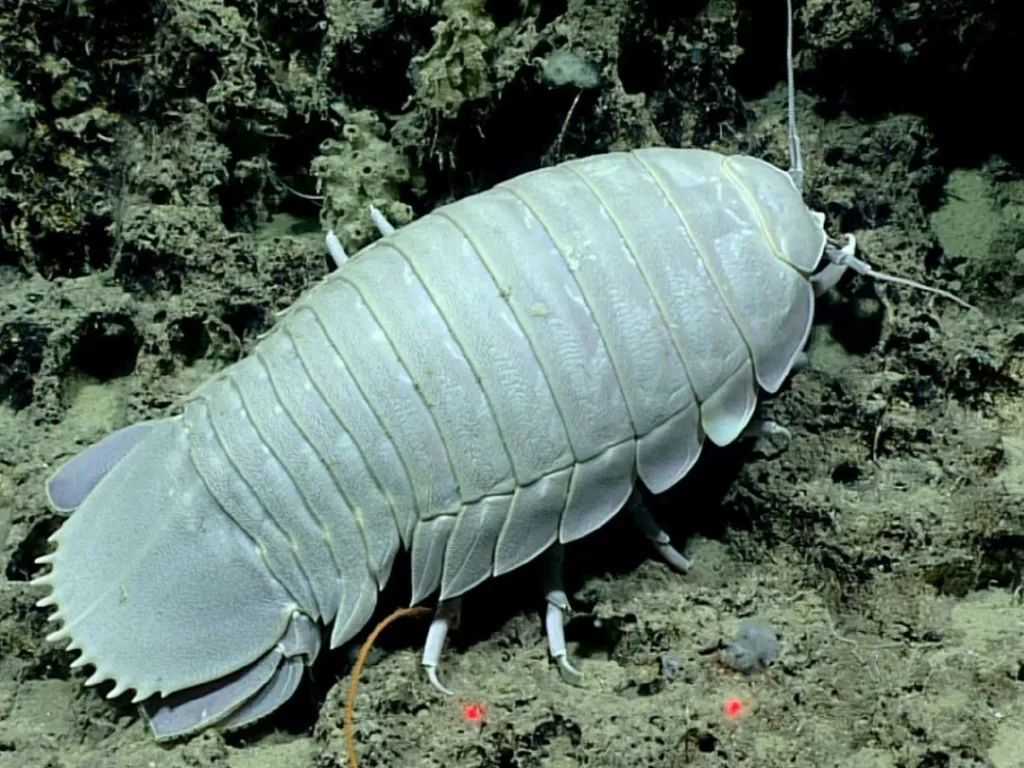
This remarkable creature holds the title of the largest member of the water louse family. Its anatomy is a testament to deep - sea adaptation, including a pair of complex compound eyes composed of nearly 4,000 individual ommatidia, positioned on either side of its head. Having first emerged 160 million years ago, the giant isopod has survived through eons with minimal physical changes, earning it the moniker "living fossil of the deep sea."
The giant isopod's resilience extends beyond its evolutionary longevity. In 2014, a specimen at a Japanese aquarium shocked the world by surviving an astonishing 5 years and 43 days without food before succumbing—a record - breaking display of endurance. This extreme fasting ability, coupled with its ancient lineage and unique morphology, continues to captivate scientists, offering valuable clues about survival strategies in the most inhospitable oceanic environments.