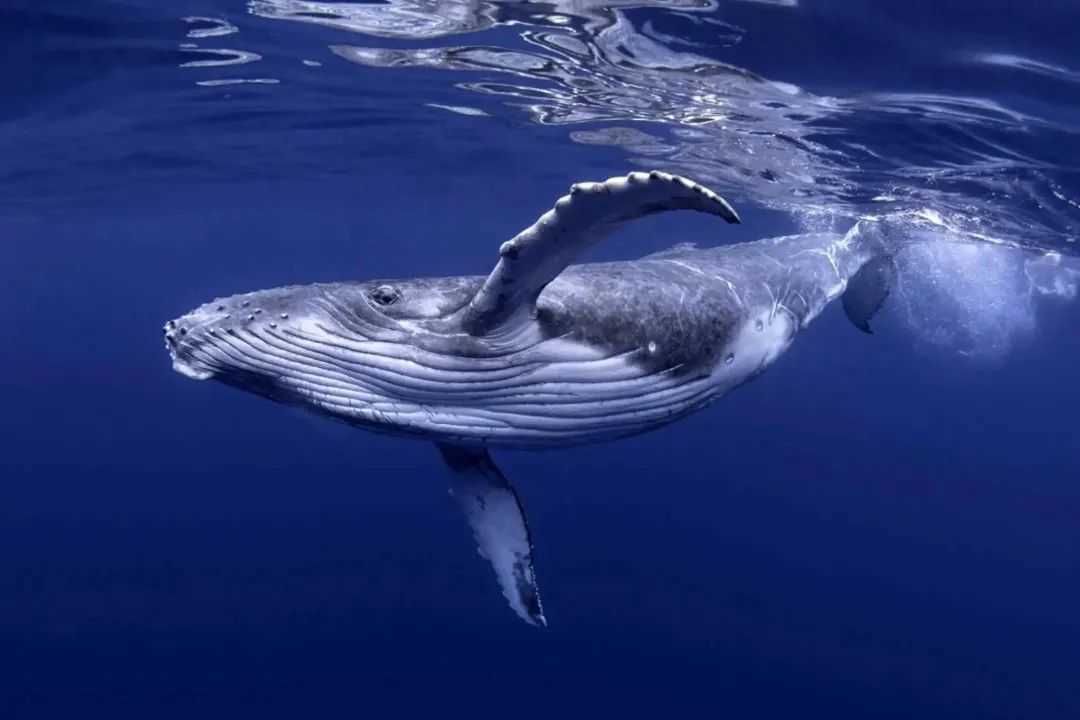
Reaching up to 15 meters in length, humpback whales (Megaptera novaeangliae) are among the most iconic and awe-inspiring creatures in Earth’s oceans. Often speculated to be the inspiration behind the mythical "Kun" — a giant fish-like creature from ancient Chinese legends — these marine mammals command attention with their massive size and distinctive appearance. When floating at the surface, their barnacle-covered skin and rugged features give them the guise of a drifting island, a sight that blends majesty with a touch of primal mystery.
Despite their imposing stature, humpback whales are renowned for their gentle nature. Unlike predatory marine mammals, they subsist on a diet of tiny fish, shrimp, and plankton, filtering thousands of liters of water through their baleen plates each day. Their feeding rituals, such as the cooperative "bubble netting" technique, showcase both their intelligence and non-aggressive temperament. Their slow, graceful movements and occasional breaches — launching their enormous bodies out of the water — further soften their intimidating appearance, revealing a playful and curious side.
Humpback whales are also celebrated for their complex vocalizations, often referred to as "whale songs," which can travel for miles through the ocean. These haunting melodies, unique to each population, are thought to play a role in mating and social bonding, adding to their reputation as sensitive, communal creatures. Though they face threats like climate change, ocean noise, and historical overfishing, conservation efforts have helped stabilize their numbers. Today, they stand as a symbol of the ocean’s capacity for both grandeur and gentleness, reminding humanity of the need to protect these gentle giants and the fragile ecosystems they inhabit. Whether seen breaching in tropical waters or migrating through icy channels, humpback whales embody the harmonious coexistence of power and peace in the marine world.